Selling a home can take time, planning, and patience.You may have prepared your home, welcomed showings, answered questions, and waited for the right buyer only to have your listing expire without a

Dated: April 8 2025
Views: 100
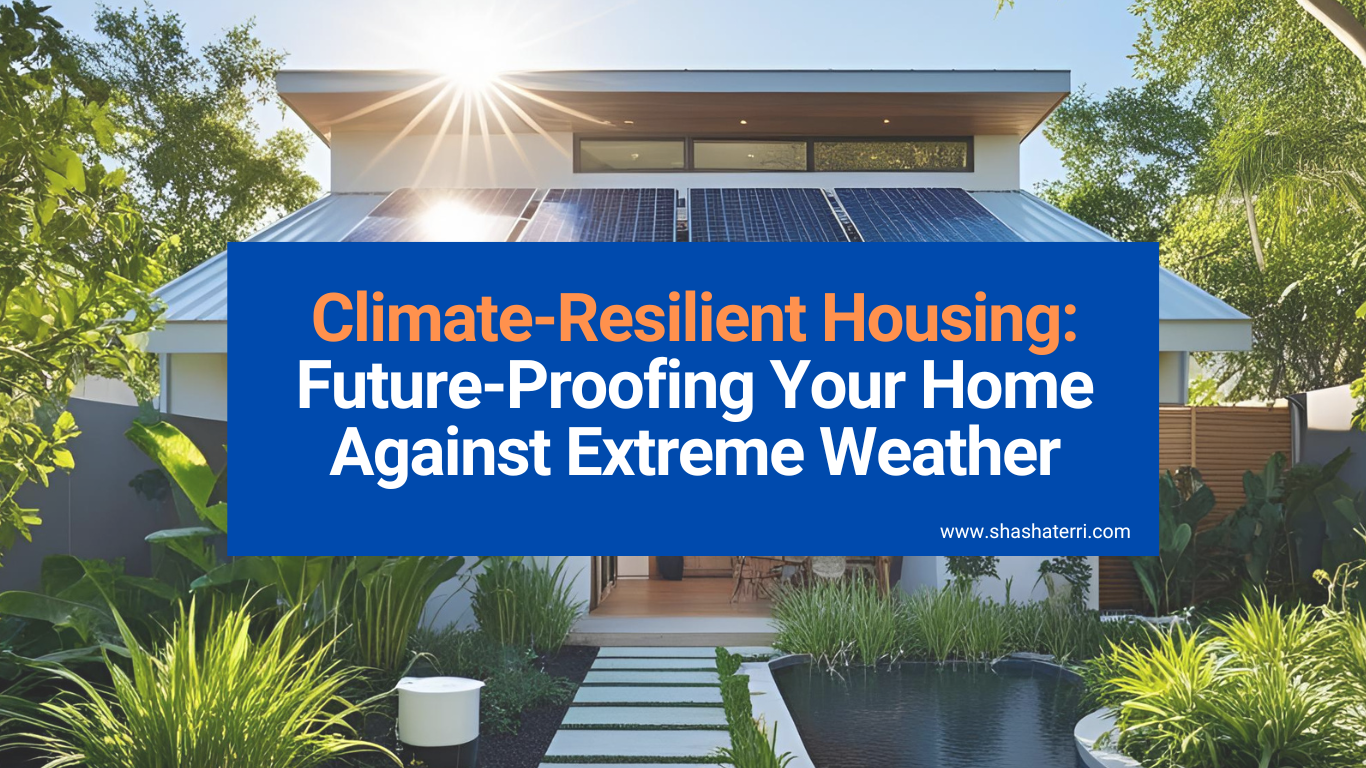
As climate change accelerates, homeowners and buyers must prioritize climate-resilient housing to safeguard properties and ensure long-term sustainability. From wildfires and hurricanes to extreme heat and flooding, homes are increasingly at risk due to more frequent and severe weather events. Implementing effective strategies can mitigate these risks, protecting both property value and residents’ safety.
Why Climate-Resilient Housing Matters
Over the last few decades, natural disasters have become more prevalent. According to the National Oceanic and Atmospheric Administration (NOAA), the U.S. experienced over 28 billion-dollar disasters in 2024 alone. This sharp increase highlights the urgency of adopting climate-resilient housing solutions.
Additionally, insurance companies are adjusting policies based on climate risk, often raising premiums or refusing coverage in high-risk areas. Homeowners who proactively upgrade their properties with resilient features may benefit from lower insurance rates, increased property value, and enhanced peace of mind.
Key Strategies for Climate-Resilient Housing
1. Fire-Resistant Design
In wildfire-prone areas, taking preventative measures can make a significant difference in protecting your home.
A great example of this is KB Home’s Dixon Trail community in Escondido, California, which integrates fire-resistant materials to enhance home safety. (NY Post)
2. Flood and Storm Protection
For homeowners in flood-prone regions, preparation is key.
The Federal Emergency Management Agency (FEMA) states that homes built with flood mitigation strategies see 40% less damage than those without such measures. (FEMA)
3. Passive Cooling and Extreme Heat Protection
With rising global temperatures, keeping homes cool efficiently is becoming more critical.
Studies by the U.S. Department of Energy show that cool roofing materials can reduce cooling costs by up to 40%. (Energy.gov)
4. Smart Home Technology for Climate Resilience
Technology is playing an increasingly significant role in home resilience. Advanced climate risk assessments and predictive analytics help homeowners make informed decisions.
Companies like CoreLogic are leveraging AI to provide homeowners with climate risk data, helping them understand potential vulnerabilities. (CoreLogic)
Pro Tips for Buyers and Sellers
For Buyers:
For Sellers:
Policy and Financial Incentives
Governments and financial institutions are beginning to incentivize climate-resilient construction.
Work with Experts
Ensuring your home is equipped to handle climate challenges is crucial. For personalized advice on buying or selling climate-resilient properties in Los Angeles, Orange, San Bernardino, and Riverside Counties, contact Shasha Truong & Terri Nguyen. With over 25+ years of experience, they can guide you through the process.
The Future of Climate-Resilient Housing
Climate-resilient housing isn’t a luxury—it’s a necessity. Investing in smart building practices and resilience upgrades can protect your home, reduce long-term costs, and contribute to a more sustainable future.
By taking proactive steps today, homeowners can ensure a safer, more secure tomorrow.
Get Instant Access to Our Exclusive Tools
Text STHOMEAPP to +1 818-319-4748 to access our FREE home search app, market reports, home valuation tools, and more!
See the List of Adul55+ Single-Story Properties in LA, Orange, San Bernardino & Riverside Counties
Check out the List of Homes with Pool in LA, Orange, San Bernardino & Riverside Counties
List of Properties in LA, Orange, San Bernardino & Riverside Counties WITHOUT HOA FEES
List of Properties in LA, Orange, San Bernardino & Riverside Counties LEASE TO OWN PROPERTIES
List of Fixer Upper Properties in LA, Orange, San Bernardino & Riverside Counties
Check out the List of Very Walkable Properties in LA, Orange, San Bernardino & Riverside Counties
List of Properties Below 500k in LA, Orange, San Bernardino & Riverside Counties
List of JUST REDUCED Properties in LA, Orange, San Bernardino & Riverside Counties
List of Properties with Fireplace
List of Properties with Basement
List of Newly Built Homes in LA, Orange, San Bernardino & Riverside Counties
References:
We are Shasha and Terri, your highly experienced real estate professionals dedicated to turning your real estate goals into reality. Fluent in English and Vietnamese, we bring 27+ years of experience ....
Selling a home can take time, planning, and patience.You may have prepared your home, welcomed showings, answered questions, and waited for the right buyer only to have your listing expire without a
Thinking about selling your home this fall? 🍂Fall can be a meaningful time for Southern California homeowners to reassess their plans, whether you're considering a move, downsizing, relocating,
Fall is often associated with change.The days become shorter, routines shift, children settle into a new school year, and many families naturally begin thinking about what they want the rest of the
If you have been waiting for the right time to buy a home, fall may be worth a closer look.For many Southern California homebuyers, the conversation often centers on mortgage rates and home prices.
 Based on information from California Regional Multiple Listing Service, Inc. as of September 25, 2026 5:15 PM UTC This information is for your personal, non-commercial use and may not be used for any purpose other than to identify prospective properties you may be interested in purchasing. Display of MLS data is usually deemed reliable but is NOT guaranteed accurate by the MLS. Buyers are responsible for verifying the accuracy of all information and should investigate the data themselves or retain appropriate professionals. Information from sources other than the Listing Agent may have been included in the MLS data. Unless otherwise specified in writing, Broker/Agent has not and will not verify any information obtained from other sources. The Broker/Agent providing the information contained herein may or may not have been the Listing and/or Selling Agent.
Based on information from September 25, 2026 5:15 PM UTC The information being provided by CRMLS is for the visitor's personal, noncommercial use and may not be used for any purpose other than to identify prospective properties visitor may be interested in purchasing. The data contained herein is copyrighted by CRMLS, CLAW, i-Tech MLS, PSRMLS and/or VCRDS and is protected by all applicable copyright laws. Any dissemination of this information is in violation of copyright laws and is strictly prohibited.
Any property information referenced on this website comes from the Internet Data Exchange (IDX) program of CRMLS. All data, including all measurements and calculations of area, is obtained from various sources and has not been, and will not be, verified by broker or MLS. All information should be independently reviewed and verified for accuracy. Properties may or may not be listed by the office/agent presenting the information.
 This information is deemed reliable but not guaranteed. You should rely on this information only to decide whether or not to further investigate a particular property. BEFORE MAKING ANY OTHER DECISION, YOU SHOULD PERSONALLY INVESTIGATE THE FACTS (e.g.square footage and lot size) with the assistance of an appropriate professional. You may use this information only to identify properties you may be interested in investigating further. All uses except for personal, non-commercial use in accordance with
the foregoing purpose are prohibited. Redistribution or copying of this information, any photographs or video tours is strictly prohibited. This information is derived from the Internet Data Exchange (IDX) service provided by San Diego MLS. Displayed property listings may be held by a brokerage firm other than the broker and/or agent responsible for this display. The information and any photographs and video tours and the compilation from which they are derived is protected by copyright.Compilation © 2026 San Diego MLS. Last Updated: September 25, 2026 5:17 PM UTC
Show More...
This information is deemed reliable but not guaranteed. You should rely on this information only to decide whether or not to further investigate a particular property. BEFORE MAKING ANY OTHER DECISION, YOU SHOULD PERSONALLY INVESTIGATE THE FACTS (e.g.square footage and lot size) with the assistance of an appropriate professional. You may use this information only to identify properties you may be interested in investigating further. All uses except for personal, non-commercial use in accordance with
the foregoing purpose are prohibited. Redistribution or copying of this information, any photographs or video tours is strictly prohibited. This information is derived from the Internet Data Exchange (IDX) service provided by San Diego MLS. Displayed property listings may be held by a brokerage firm other than the broker and/or agent responsible for this display. The information and any photographs and video tours and the compilation from which they are derived is protected by copyright.Compilation © 2026 San Diego MLS. Last Updated: September 25, 2026 5:17 PM UTC
Show More...
 Last updated: September 25, 2026 5:09 PM UTC Property Information © 2026 MLSListings Inc. All rights reserved. Listing information is deemed reliable but not guaranteed. The data relating to real estate for sale on this display comes in part from the Internet Data Exchange program of the MLSListingsTM MLS system. Real estate listings held by brokerage firms other than eXp Realty of Greater Los Angeles, Inc. CA DRE# 02188471 are marked with the Internet
Data Exchange and detailed information about them includes the names of the listing brokers and listing agents.
The information being provided by CARETS (CLAW, CRISNet MLS, DAMLS, CRMLS, i-Tech MLS, and/or VCRDS)
is for the visitor's personal, non-commercial use and may not be used for any purpose other than to identify
prospective properties visitor may be interested in purchasing.
Any information relating to a property referenced on this web site comes from the Internet Data Exchange (IDX)
program of CARETS. This web site may reference real estate listing(s) held by a brokerage firm other than the
broker and/or agent who owns this web site.
The accuracy of all information, regardless of source, including but not limited to square footages and lot sizes, is
deemed reliable but not guaranteed and should be personally verified through personal inspection by and/or with
the appropriate professionals. The data contained herein is copyrighted by CARETS, CLAW, CRISNet MLS,
DAMLS, CRMLS, i-Tech MLS and/or VCRDS and is protected by all applicable copyright laws. Any dissemination
of this information is in violation of copyright laws and is strictly prohibited.
CARETS, California Real Estate Technology Services, is a consolidated MLS property listing data feed comprised
of CLAW (Combined LA/Westside MLS), CRISNet MLS (Southland Regional AOR), DAMLS (Desert Area MLS),
CRMLS (California Regional MLS), i-Tech MLS (Glendale AOR/Pasadena Foothills AOR) and VCRDS (Ventura
County Regional Data Share)
Show More...
Last updated: September 25, 2026 5:09 PM UTC Property Information © 2026 MLSListings Inc. All rights reserved. Listing information is deemed reliable but not guaranteed. The data relating to real estate for sale on this display comes in part from the Internet Data Exchange program of the MLSListingsTM MLS system. Real estate listings held by brokerage firms other than eXp Realty of Greater Los Angeles, Inc. CA DRE# 02188471 are marked with the Internet
Data Exchange and detailed information about them includes the names of the listing brokers and listing agents.
The information being provided by CARETS (CLAW, CRISNet MLS, DAMLS, CRMLS, i-Tech MLS, and/or VCRDS)
is for the visitor's personal, non-commercial use and may not be used for any purpose other than to identify
prospective properties visitor may be interested in purchasing.
Any information relating to a property referenced on this web site comes from the Internet Data Exchange (IDX)
program of CARETS. This web site may reference real estate listing(s) held by a brokerage firm other than the
broker and/or agent who owns this web site.
The accuracy of all information, regardless of source, including but not limited to square footages and lot sizes, is
deemed reliable but not guaranteed and should be personally verified through personal inspection by and/or with
the appropriate professionals. The data contained herein is copyrighted by CARETS, CLAW, CRISNet MLS,
DAMLS, CRMLS, i-Tech MLS and/or VCRDS and is protected by all applicable copyright laws. Any dissemination
of this information is in violation of copyright laws and is strictly prohibited.
CARETS, California Real Estate Technology Services, is a consolidated MLS property listing data feed comprised
of CLAW (Combined LA/Westside MLS), CRISNet MLS (Southland Regional AOR), DAMLS (Desert Area MLS),
CRMLS (California Regional MLS), i-Tech MLS (Glendale AOR/Pasadena Foothills AOR) and VCRDS (Ventura
County Regional Data Share)
Show More...
 The information being provided by Conejo Simi Moorpark Association of REALTORS ® ("CSMAR") is for the visitor's personal, non-commercial use and may not be used for any purpose other than to identify prospective properties visitor may be interested in purchasing. Any information relating to a property referenced on this web site comes from the Internet Data Exchange ("IDX") program of CSMAR. This web site may reference real estate listing(s) held by a brokerage firm other than the broker and/or
agent who owns this web site. Any information relating to a property, regardless of source, including but not limited to square footages and lot sizes, is deemed reliable but not guaranteed and should be personally verified through personal inspection by and/or with the appropriate professionals. The data contained herein is copyrighted by CSMAR and is protected by all applicable copyright laws. Any dissemination of this information is in violation of copyright laws and is strictly prohibited. 2026
Show More...
The information being provided by Conejo Simi Moorpark Association of REALTORS ® ("CSMAR") is for the visitor's personal, non-commercial use and may not be used for any purpose other than to identify prospective properties visitor may be interested in purchasing. Any information relating to a property referenced on this web site comes from the Internet Data Exchange ("IDX") program of CSMAR. This web site may reference real estate listing(s) held by a brokerage firm other than the broker and/or
agent who owns this web site. Any information relating to a property, regardless of source, including but not limited to square footages and lot sizes, is deemed reliable but not guaranteed and should be personally verified through personal inspection by and/or with the appropriate professionals. The data contained herein is copyrighted by CSMAR and is protected by all applicable copyright laws. Any dissemination of this information is in violation of copyright laws and is strictly prohibited. 2026
Show More...
 The MLS™ I-Tech ® All information deemed reliable but not guaranteed. All properties are subject to prior sale, change or withdrawal. Neither listing broker(s) or information provider(s) shall be responsible for any typographical errors, misinformation, misprints and shall be held totally harmless. Listing(s) information is provided for consumer's personal, non-commercial use and may not be used for any purpose other than to identify prospective properties consumers may be interested in
purchasing. The data relating to real estate for sale on this website comes in part from the Internet Data Exchange program of the Multiple Listing Service. Real estate listings held by brokerage firms other than eXp Realty of Greater Los Angeles, Inc. CA DRE# 02188471 may be marked with the Internet Data Exchange logo and detailed information about those properties will include the name of the listing broker(s) when required by the MLS. Copyright ©2026 All rights reserved.
Last Updated: September 25, 2026 4:43 PM UTC
Show More...
The MLS™ I-Tech ® All information deemed reliable but not guaranteed. All properties are subject to prior sale, change or withdrawal. Neither listing broker(s) or information provider(s) shall be responsible for any typographical errors, misinformation, misprints and shall be held totally harmless. Listing(s) information is provided for consumer's personal, non-commercial use and may not be used for any purpose other than to identify prospective properties consumers may be interested in
purchasing. The data relating to real estate for sale on this website comes in part from the Internet Data Exchange program of the Multiple Listing Service. Real estate listings held by brokerage firms other than eXp Realty of Greater Los Angeles, Inc. CA DRE# 02188471 may be marked with the Internet Data Exchange logo and detailed information about those properties will include the name of the listing broker(s) when required by the MLS. Copyright ©2026 All rights reserved.
Last Updated: September 25, 2026 4:43 PM UTC
Show More...
 Page Lake Powell Association of REALTORS® All information deemed reliable but not guaranteed. All properties are subject to prior sale, change or withdrawal. Neither listing broker(s) or information provider(s) shall be responsible for any typographical errors, misinformation, misprints and shall be held totally harmless. Listing(s) information is provided for consumer's personal, non-commercial use and may not be used for any purpose other than to identify prospective properties consumers may
be interested in purchasing. The data relating to real estate for sale on this website comes in part from the Internet Data Exchange program of the Multiple Listing Service. Real estate listings held by brokerage firms other than eXp Realty of Greater Los Angeles, Inc. CA DRE# 02188471 may be marked with the Internet Data Exchange logo and detailed information about those properties will include the name of the listing broker(s) when required by the MLS. Copyright ©2026 All rights reserved.
Last Updated: September 25, 2026 5:29 PM UTC
Show More...
Page Lake Powell Association of REALTORS® All information deemed reliable but not guaranteed. All properties are subject to prior sale, change or withdrawal. Neither listing broker(s) or information provider(s) shall be responsible for any typographical errors, misinformation, misprints and shall be held totally harmless. Listing(s) information is provided for consumer's personal, non-commercial use and may not be used for any purpose other than to identify prospective properties consumers may
be interested in purchasing. The data relating to real estate for sale on this website comes in part from the Internet Data Exchange program of the Multiple Listing Service. Real estate listings held by brokerage firms other than eXp Realty of Greater Los Angeles, Inc. CA DRE# 02188471 may be marked with the Internet Data Exchange logo and detailed information about those properties will include the name of the listing broker(s) when required by the MLS. Copyright ©2026 All rights reserved.
Last Updated: September 25, 2026 5:29 PM UTC
Show More...
